
What the body has come to know: a collective walking experience
Unfolding through the city of Guimarães, Portugal, The Walking Body is an artistic research programme that explores collective walking as a methodology for situated knowledge, creative inquiry and engagement with place. Taking place across three consecutive editions (2024–2026), the programme has generated a range of artistic outputs: from drawings to photographs, sound works to maps, embroidery to performance. Materialisations that go beyond mere documentation, emerging instead as expressions of the relationships between body, place and collective experience. Workshop convenors Natacha Antão, Miguel B. Duarte and Geert Vermeire reflect on how the project has generated new forms of embodied and collective knowledge through walking. This is part of our Walking Arts Research section.
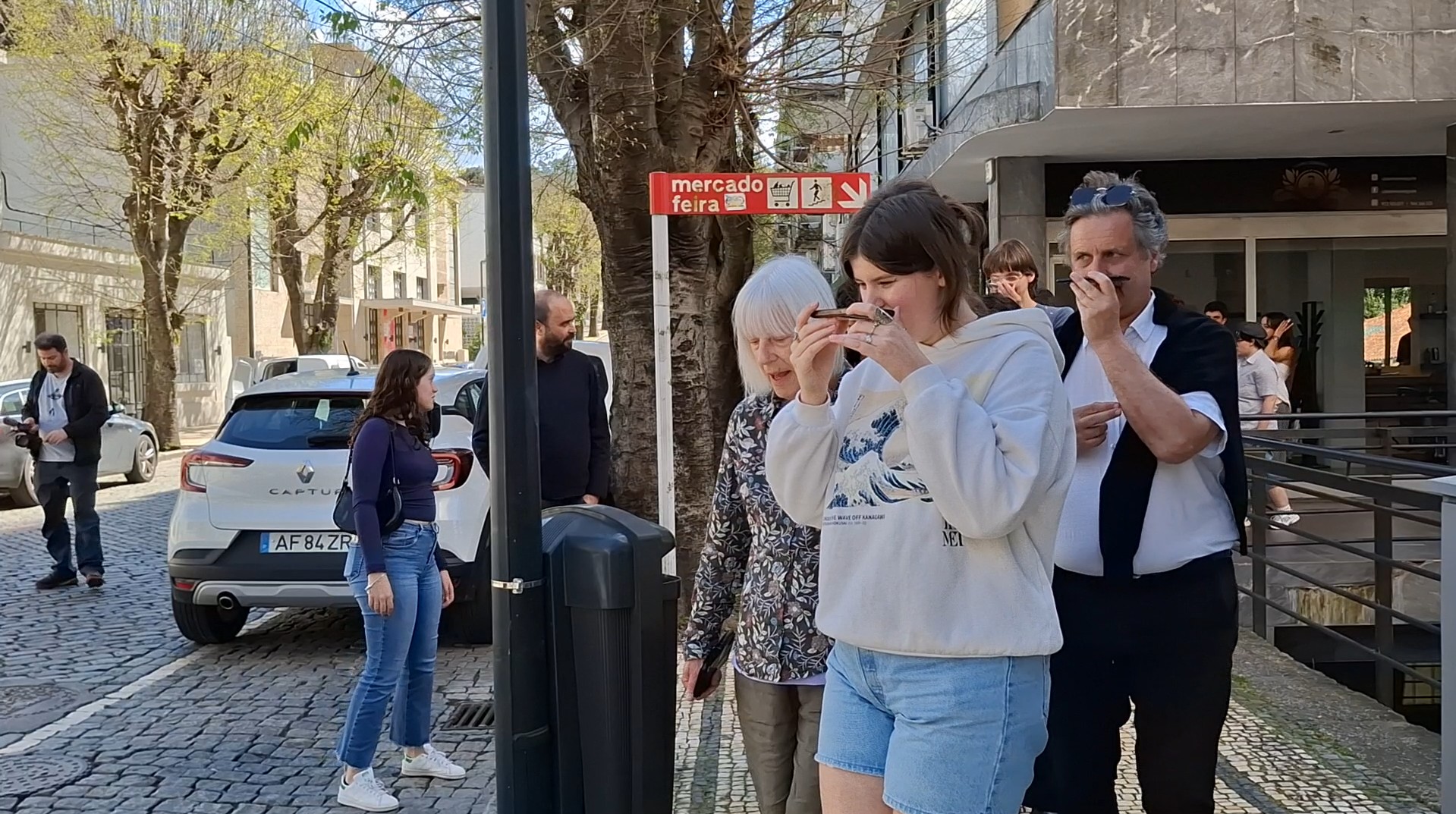
A group gathers outside Garagem Avenida in Guimarães and begins to walk. Some carry notebooks, others cameras or mobile phones, some just walk. Following the sound of water running next to the streets, they make their way towards the old tanning basins where leather was once processed. Later they pause beneath the trees beside the granite walls leading to the medieval houses of the historic centre. They listen, observe, draw, record and converse. Several hours later they return with sketches, recordings, found objects and ideas still unfolding. More importantly, they return with a changed way of seeing the city.
The Walking Body is a research and visual creation project based in Guimarães, Portugal, that explores shared walking as an artistic, pedagogical and research practice. Bringing together artists, researchers, students and local communities, the project investigates how walking generates situated knowledge through embodied attention, collective inquiry and creative experimentation. This visual essay reflects on the 2024, 2025 and 2026 editions, arguing that walking functions not simply as movement through space but as a methodology for producing relationships between body, place and image.
Walking does not simply move bodies through places; it reorganises the relationships through which places become perceptible. The artistic works that emerge are not records of this process but its continuation.
Rather than treating artistic production as documentation of a walk, The Walking Body understands drawings, photographs, sound works, maps, embroidery and performative gestures as material expressions of the relationships that emerge while walking. Through three complementary modes of inquiry – more-than-human perception, collective memory inscribed in public space and freedom as a situated practice – the project demonstrates how walking cultivates ecological awareness, social imagination and new forms of visual creation. The essay combines critical reflection with examples from the participating artists’ walkshops, showing how artistic practice extends the walk beyond the moment of movement and contributes to contemporary debates on walking arts, place-based research and situated knowledge.
1
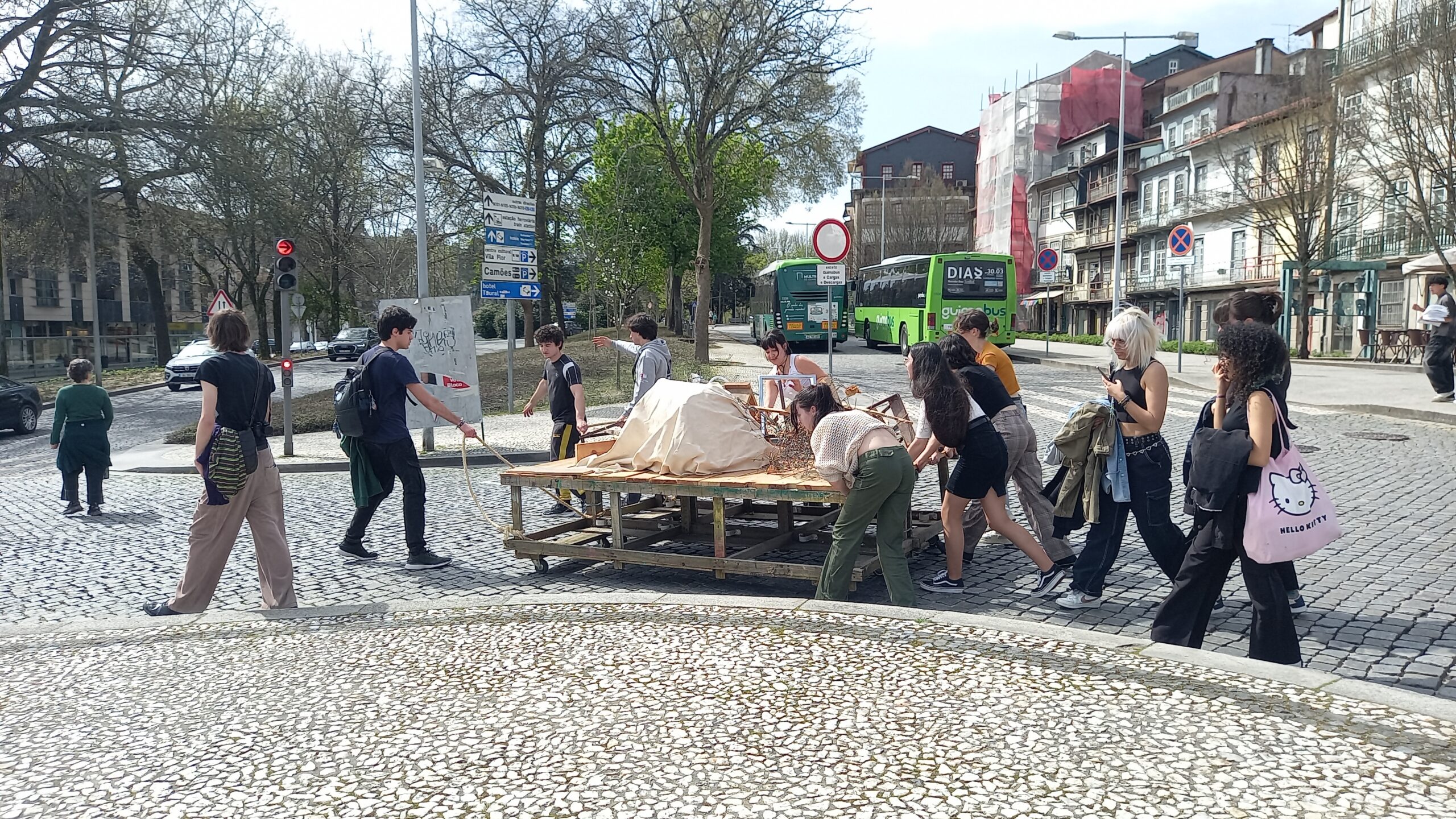
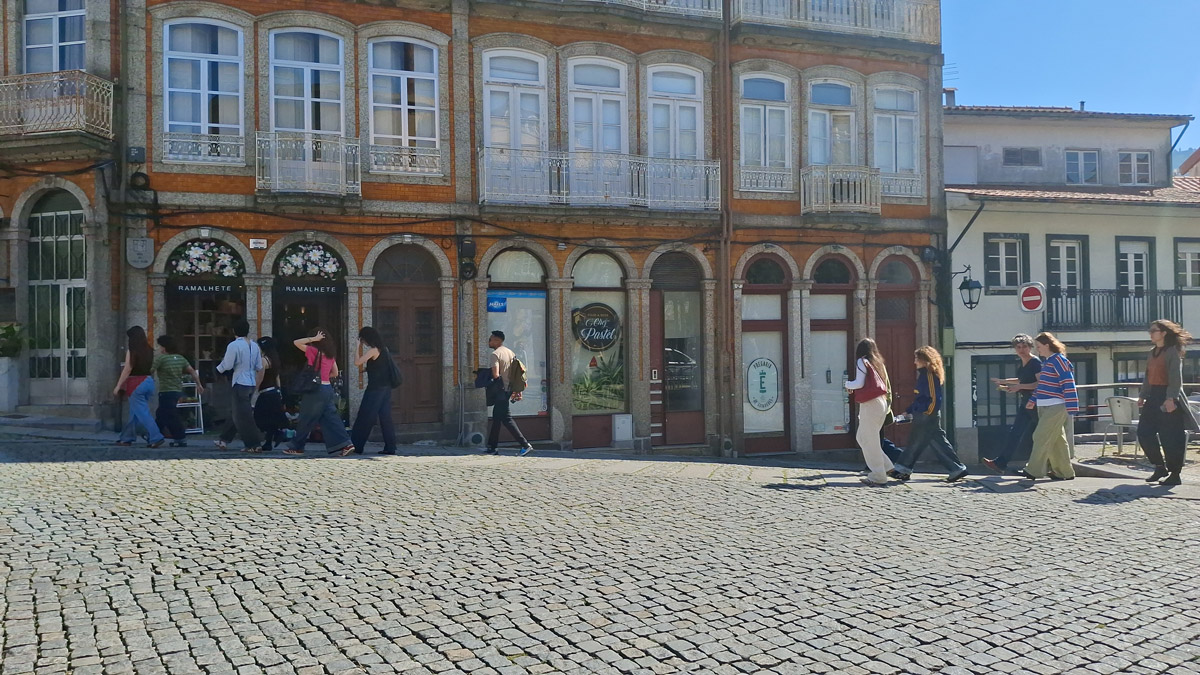
A group of people walks through the streets of Guimarães.
Granite houses, narrow cobbled streets polished by centuries of footsteps, small squares where cafés spill onto the pavement, and church bells quietly marking the rhythm of the day form the setting for a shared exploration. Some participants walk in pairs, others alone. They stop, listen, draw, photograph, collect, converse, or simply remain still. When they return to the gallery, they bring back more than objects or sketches. They return with altered ways of perceiving the place, and with artistic traces that materialise the relationships established during the walk. It is from this premise that The Walking Body begins.
2
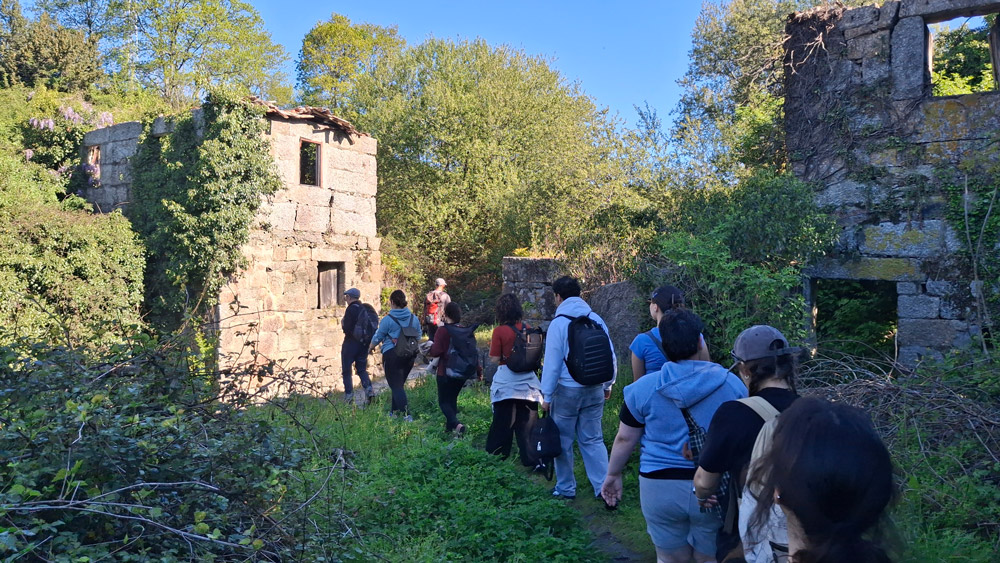
Beyond the medieval centre, the city opens into green hills, woodland paths, streams, and the wooded slopes of Penha, where urban life slowly dissolves into landscape.
Walking together is central to our practice. Walking operates as a sensory mediation between space and experience: slow, attentive, fully engaged as the senses awaken. The Walking Body develops a way of seeing in process, attentive to the subtle relations within the landscape, especially in peri-urban contexts where the urban and the natural coexist in tension.
Walking together makes a difference because it transforms walking from an individual act of perception into a shared field of attention. In The Walking Body, the walk is not only movement through space, but a situation in which bodies, memories, gestures, conversations and silences begin to affect one another. What one participant notices – a sound, a pause, a detail in the pavement, a tree, a story, a change of direction – can redirect the attention of others. In this sense, the history and memory of a site are not simply encountered as fixed narratives; they are reactivated and reshaped through different experiences, associations and forms of knowledge. Collective walking can therefore bring forward minor memories, overlooked details and embodied responses that might remain invisible in a solitary walk.
The shared pace and rhythm of walking also allow new perspectives to emerge. Walking together requires adjustment: slowing down, waiting, listening, following, deviating and becoming aware of how others inhabit the same place differently. Walking as a group, aware of how others move and walk, encourages us to pay attention to one another. A group of walkers is conscious of the others, forming a single entity that must look after each individual in order to function as a whole. We stop to wait for those at the back of the line, we quicken our pace to shorten the file, we look back to make sure that everyone is fine. A gesture of reaching out to others.
Walking together creates a temporary community of perception, where attention is distributed rather than centred in a single subject. What emerges is not a single interpretation of place, but a more layered and porous understanding of it. This is why walking together is central to The Walking Body: it allows knowledge to arise not only from what one sees individually, but from what becomes perceptible through others and from being aware of the others.
Walking cultivates a way of seeing in process. From this attentive encounter with the territory, artistic forms gradually emerge – not as representations of the walk, but as material, visual, sonic, or performative crystallisations of the relationships that the walk has revealed.
3
In the 2024, 2025 and 2026 editions, The Walking Body frames this attention around three modes of perception that structure different ways of engaging with place.
The first – the individual experience of place expanded beyond the human – explores practices of listening and ecological attention, where the body decentres and expands its capacity for perception. Geert Vermeire, Fred Adam and Veronica Perales point towards forms of perception that cultivate ecological attention, broaden our awareness of more-than-human relationships, and decentre the human as the sole measure of experience.
Artistic practices help cultivate this expanded attention. Listening exercises, sensory scores, collective observation, field recording, mapping, drawing, collecting, or simply remaining still for extended periods all interrupt habitual ways of seeing. They invite participants to notice not only what they themselves perceive, but also the traces, rhythms, and agencies of the more-than-human world. The aim is not to represent nature more accurately, but to enter into a richer dialogue with it.
4
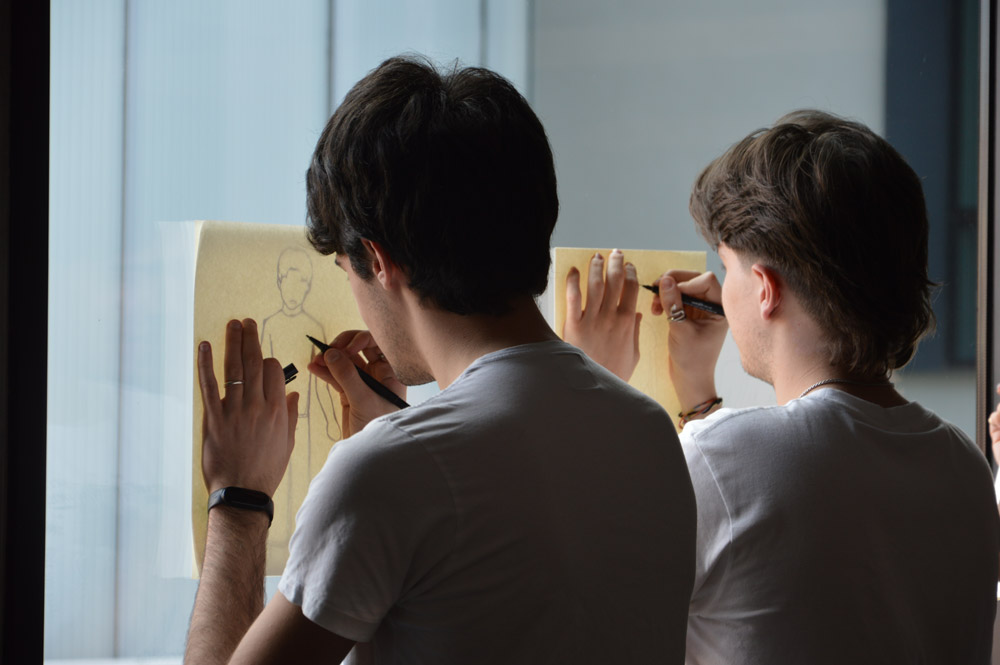
The second mode – community and place as collective memory – focusses on public space as an inscribed, lived and contested territory. Shared walking becomes a practice of critical reading and the construction of narratives, where individual and collective memories intersect.
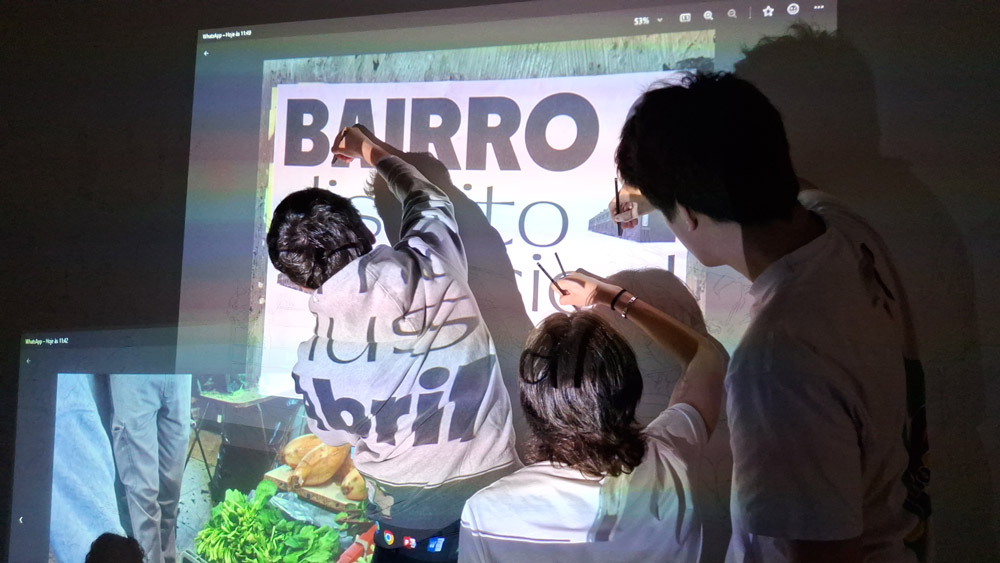
The walkshops Criss-Crossing by Jordi Lafon and Montsita Rierola exemplify this approach by inviting participants to explore Guimarães through collective walking, conversation, photography and drawing. Rather than observing the city from a distance, participants gradually construct shared maps of attention, where personal memories, everyday encounters and overlooked places become part of a collective reading of the territory. The resulting drawings as a mural map do not simply document the walk; they reveal how places are continuously recreated through shared experience.
Similarly, Why Do We Need a Tree? by Natacha Antão transforms the tree into a meeting point between ecological awareness and social memory. Through walking, observation, conversation and sensory engagement, participants are encouraged to reconsider the relationships between people, trees and urban life. The tree becomes not only a biological presence but also a social and symbolic landmark around which stories, memories and reflections accumulate.
Together, these works demonstrate how walking can become a form of social engagement and spatial interpretation. They invite participants not simply to move through space, but to recognise how places are continually shaped by memory, encounter, ecological relationships and collective imagination.
5
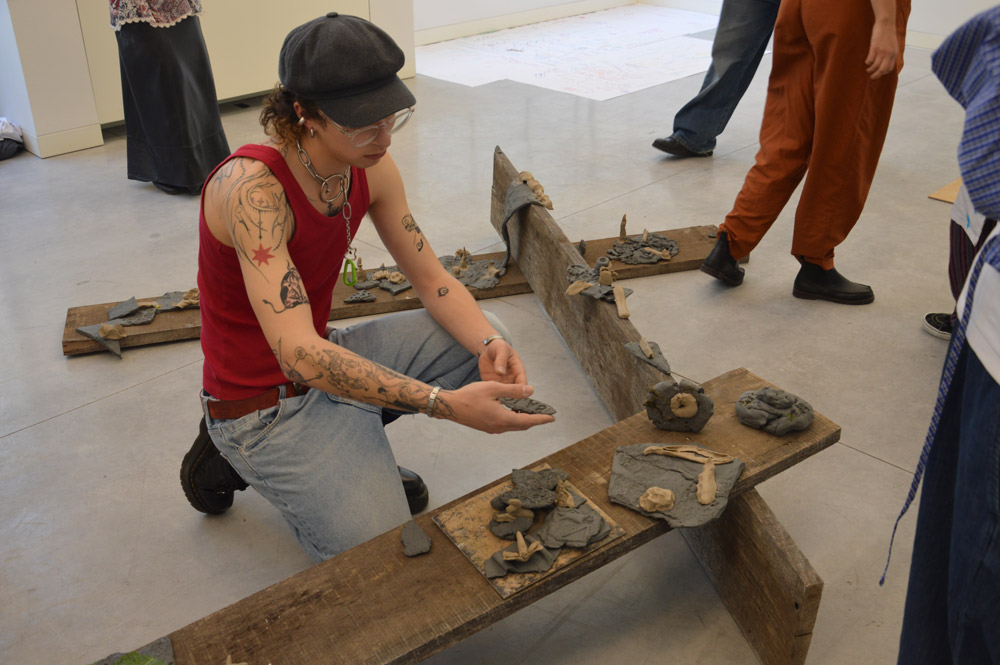
The third mode – freedom – approaches place as a field of power and possibility for reconfiguration.
In Footnotes to Freedom, ReRouting invites participants to collectively map places in Guimarães where they experience freedom, transforming personal reflections into drawings, texts, clay objects and a performative walk. By placing these fragile traces back into the city, the project encourages participants to reconsider who public space belongs to, how it is experienced, and how freedom can be collectively imagined.
Similarly, Free Steps between Walls and Hills by Miguel Duarte and AVE (Associação Vimaranense para a Ecologia) is a 22-kilometre walk from the centre of Guimarães to the Citânia de Briteiros. The walk becomes a slow reading of the territory. Crossing urban streets, rural paths, walls and hills, participants experience the landscape as a living archive where natural, cultural and historical processes intersect. Freedom emerges as a shared practice of attention, reciprocity and collective movement through the territory.
Finally, Kids Walk reverses familiar roles by inviting adults to rediscover the city through children’s outdoor games. Squares, streets and overlooked spaces are transformed into places of play, imagination and intergenerational exchange. Walking becomes an invitation to inhabit public space differently, questioning its habitual uses and opening it to new forms of encounter.
Together, these projects show that freedom in walking arts is not simply the ability to move. It is the capacity to imagine, negotiate and temporarily reshape the ways in which space is perceived, shared and lived.
6
Not everything finds visual form. There are practices in which walking remains a form of sensory inquiry, where what is carried back are shared stories, moments of togetherness and a quietly altered way of seeing the world. References such as Anne Lehtelä, Manuel Fernandes and AntVenture by Fred Adam and David Merleau highlight approaches grounded in experience and relational processes, expanding the field beyond representation.
In Belonging & Letting Go, Anne Lehtelä combines gentle morning running with conversation. Moving together through the city, participants reflect on personal and collective burdens, experiences of belonging, and what they wish to leave behind. The changing pace of the run, the informal conversations, and the shared physical effort create a temporary community in which listening and mutual support become the work itself.
Similarly, Manuel Fernandes’ São Torcato Trans_Substancial takes participants on a seven-hour collective walk from the Monument of the Battle of São Mamede to the Sanctuary of São Torcato, passing through fields, forests and rural landscapes on the outskirts of Guimarães. Interspersed with moments of reflection, conversation and a shared picnic, the walk invites participants to experience the territory as a living dialogue between body, landscape, history and spirituality. Drawing parallels between the contours of the human body and the surrounding terrain, between religious narratives, local myths and the traces of medieval history, Fernandes transforms walking into a collective act of discovery. Rather than producing a finished artwork, the walk cultivates a shared experience in which place is understood as something continuously shaped through memory, imagination and embodied presence..
AntVenture, developed by Fred Adam and David Merleau, invites participants to follow the world from the perspective of ants, slowing down to observe the ground, minute movements and overlooked ecologies. By shifting attention towards scales of life that usually escape notice, the work challenges habitual human perspectives and cultivates curiosity, care and wonder for the more-than-human world. Here, the transformation lies less in producing an artwork than in reshaping how participants perceive and relate to their surroundings.
7
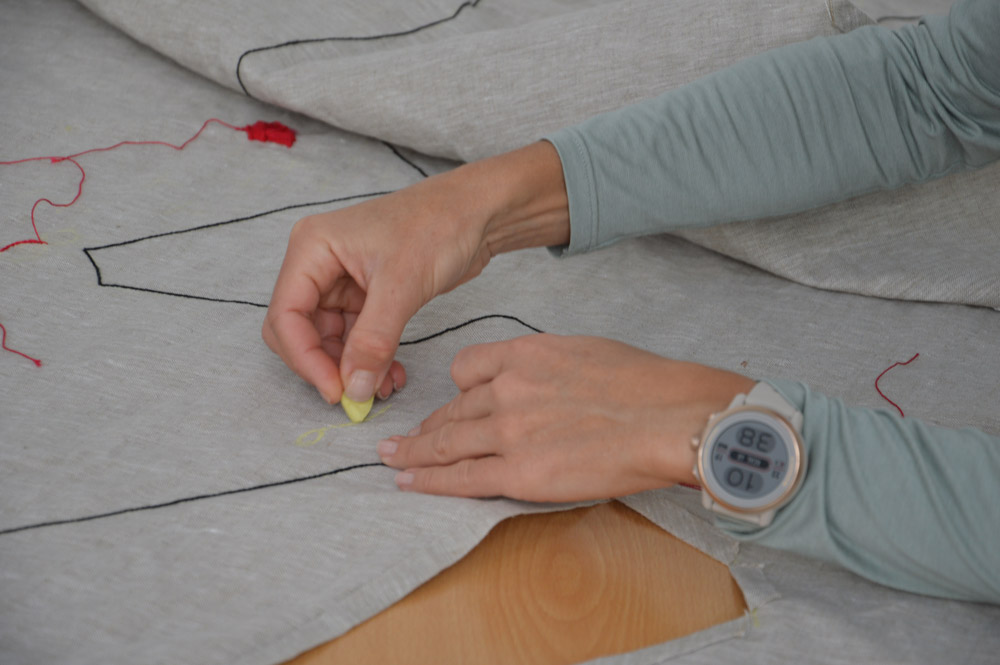
As a tool for visual creation, walking introduces a dynamic and processual perception. The visual arts function as languages through which this sensory experience is expressed: drawing, embroidery and sound emerge as extensions of the body in motion. Creation does not happen only afterwards, but also during the walk, transforming the act itself. It is in the threshold between departure and arrival, between sensing and fixing, that the image emerges – not as a record of what was, but as a trace of what happened in-between, as the crystallisation of a relationship. A found stone, a thread stitched along a remembered route, a shared gesture, a sound composition, or a photograph of connecting hands all become traces of an encounter. They do not simply represent the walk; they allow it to continue.

8
After walking, the place is no longer the same. Walkshops become spaces of collective experimentation where teaching and learning intertwine, and where knowledge emerges from the interaction between bodies, environments and communities. Place ceases to be a backdrop and becomes an active agent in the production of meaning – and the body that returns is slower, more porous.
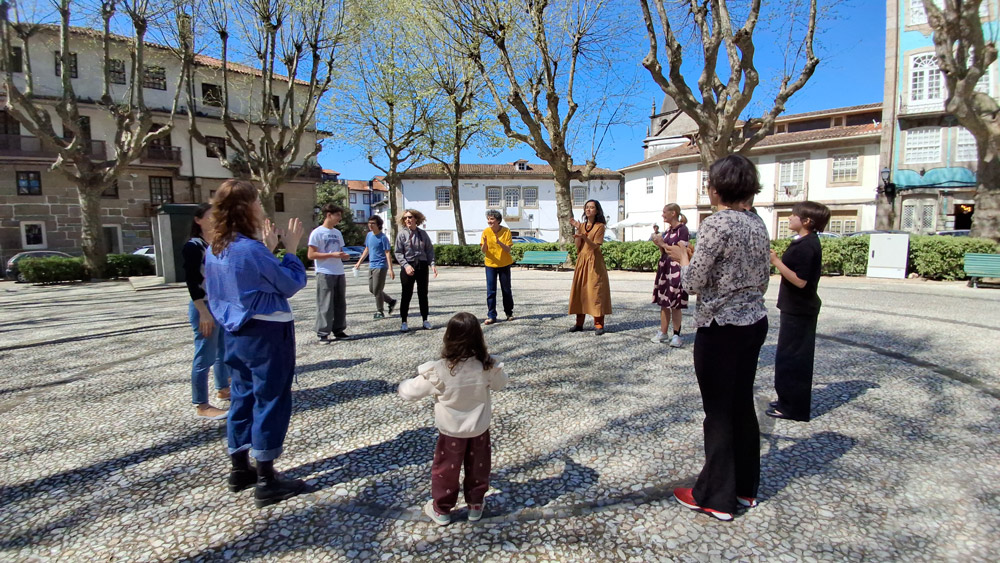
The Walking Body demonstrates that shared walking is not simply a means of encountering places, but a methodology through which perception, collective inquiry and artistic creation continually shape one another. Across the 2024–2026 editions, walking emerges as a practice that expands attention beyond the individual, reconnects personal experience with collective memory, and reimagines freedom as a situated and relational process. The visual works that accompany these walks – drawings, photographs, sound pieces, embroidered traces, maps and performative gestures – are not representations of the journey, but crystallisations of the relationships that walking has made possible. They materialise encounters between bodies, places and more-than-human ecologies, allowing the experience to continue beyond the walk itself.
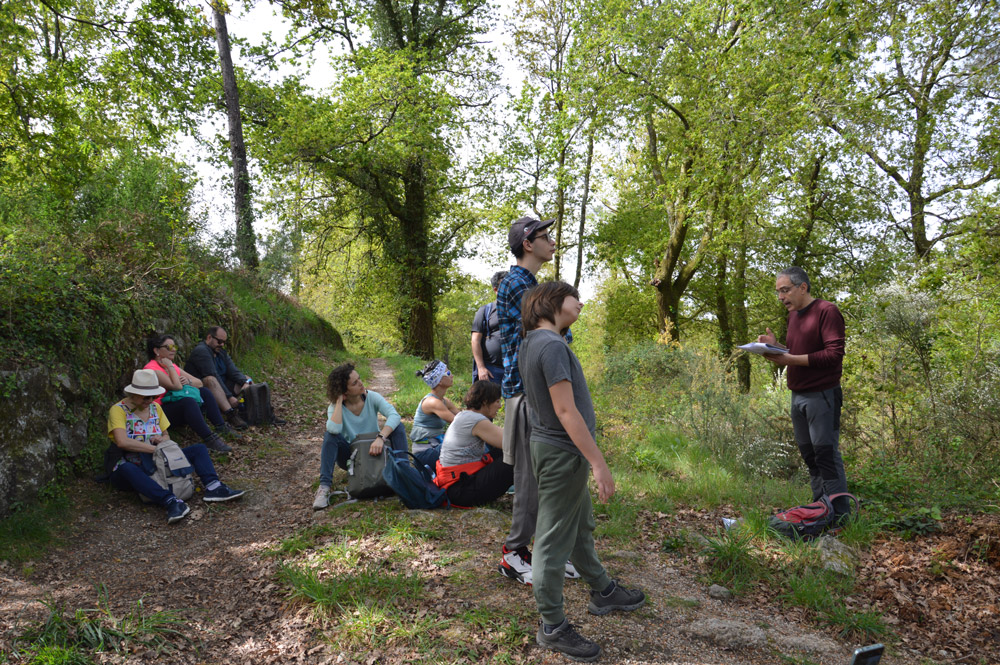
The Walking Body does not propose a single method of walking. Instead, it offers an evolving ecology of artistic practices through which artists, researchers, students and local communities investigate how movement generates knowledge. Across its different editions, the project has shown that situated knowledge is created not only through reflection but through attention, dialogue, making and shared experience.
The drawings, photographs, embroidered routes, sound pieces, maps and performative gestures presented here are therefore not illustrations of walks. They are continuations of them. They allow encounters with people, places and more-than-human worlds to remain active long after the walk has ended, inviting others to enter the conversation.
Footnotes & references
The Walking Body project: walk.lab2pt.net
Further information on the contributing artists, practitioners and projects:
Anne Lethelä: annelehtela.com
Ant Venture: antventure.ca
Ave – Associação Vimaranense para a Ecologia: ave-ecologia.org
Deriva Mussol: derivamussol.net
Miguel B. Duarte: miguelbduarte.wordpress.com
Natacha Antão: natachaantao.wordpress.com
Locative Media Supercluster: supercluster.eu
Veronica Perales: veronicaperales.eu
WALC: www.walctogether.eu
Milena – Made of Walking: www.themilena.com
The Rerouting Project: www.thereroutingproject.org
Recent articles
Walking through places generates mental images we carry with us: glimpses of where we were and what we did. But can we be sure of that? Think of the image you carry of a place you’ve walked: its colours, how it unfolded, its texture, its sound. Always slipping, always being… Read more »
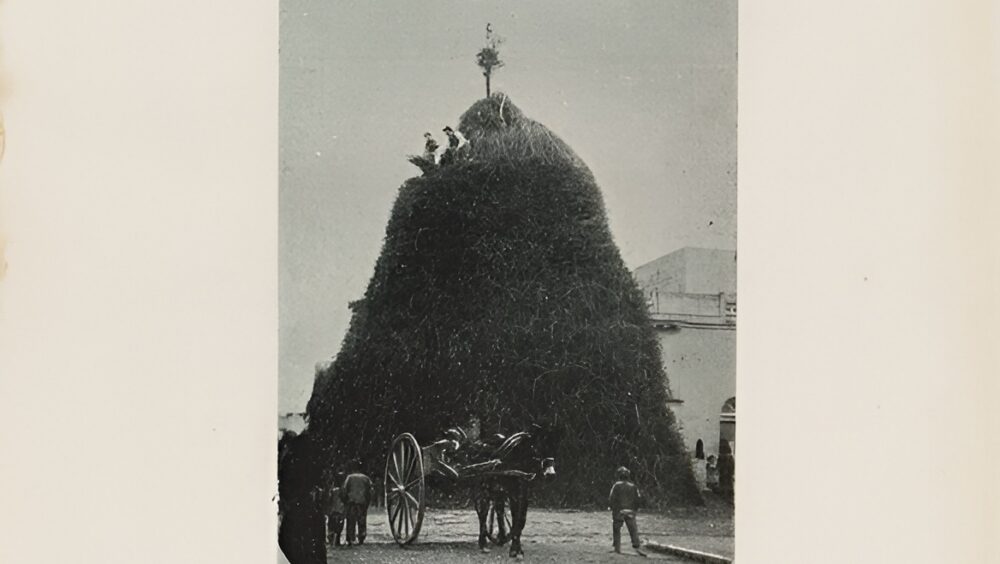
Known as Fòcara (from the Latin focus, meaning “fire”) in the Salento dialect of Southern Italy, the Fires of Saint Anthony in Novoli is a colossal bonfire lit annually in honor of Saint Anthony the Abbot, patron saint of animals. In this section of the Past Present Archive, we publish… Read more »
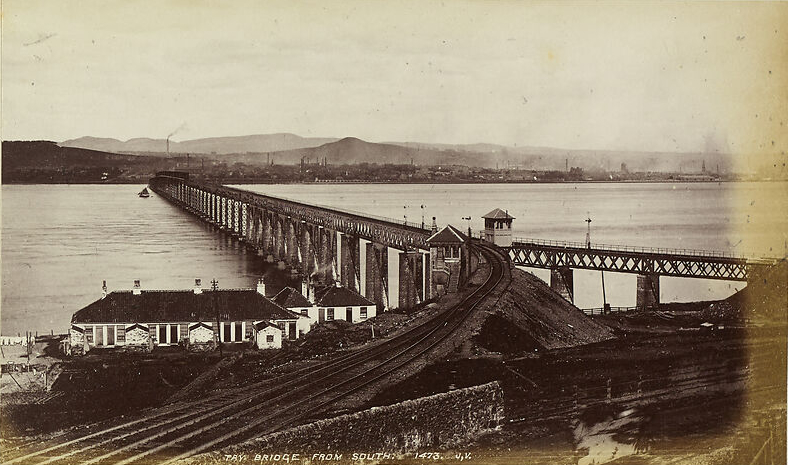
At some point in the early twentieth century, during one of her many travels to Scotland, Vernon Lee (the pen name of Violet Paget) visited the shores of Fife, then one of the country’s most heavily industrialised regions. Driven primarily by coal extraction and linoleum manufacturing, Fife’s industrial expansion left… Read more »